
The Turnkey Standard: Completion Over Potential in Prime Real Estate
Value in prime real estate is shifting from potential to execution. Turnkey homes are gaining importance as buyers prioritise certainty, design quality and immediate usability in today’s market.
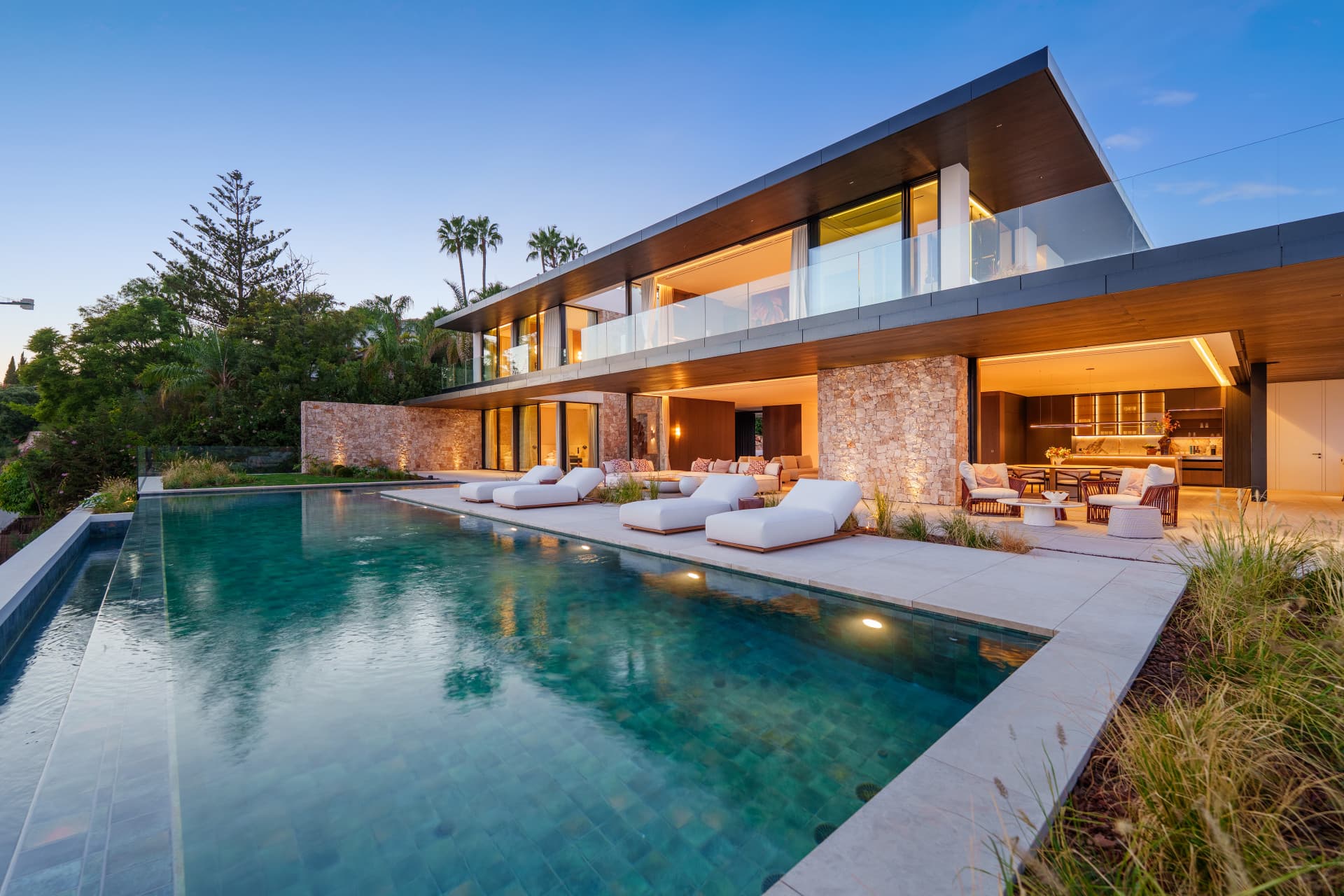
The definition of value at the top end of the property market is changing. For a long time, value was tied to potential. Many buyers aim was to acquire a property below its perceived ceiling and improve it through renovation, design and repositioning. However, that approach depended on stable construction costs, predictable timelines and a clear path from acquisition to completion and those conditions are less consistent today.
Build costs have increased, timelines are harder to control, and delivering a high-quality result requires more coordination and oversight than before. The difference between what is planned and what is ultimately delivered has become more difficult to manage, particularly at the level expected in the prime market.
As a result, demand is moving towards properties where that process has already been completed. Homes that are fully designed, built and finished, to remove a layer of uncertainty. The buyer is not estimating cost, time or outcome as all three are already defined. This is where the turnkey premium comes from. It reflects a shift in how value is assessed, with greater weight placed on execution and certainty rather than on future potential.
From Value-Add to Value Certainty
For years, prime real estate allowed room for interpretation. A property could be acquired below its perceived ceiling, with the expectation that design, renovation and positioning would unlock its full value. That model has not disappeared, but it has become less predictable.
The process of creating that upside is more complex than it once was. Construction timelines are less reliable, costs are harder to control, and the margin for error has narrowed. What was previously a calculated strategy now carries a level of uncertainty that many buyers are no longer willing to take on. As a result, the focus has shifted from what a property could become to what it already delivers.
Time as a Pricing Mechanism
At the upper end of the market, time has become a defining factor in decision-making. The modern buyer is often international, balancing multiple residences and operating within limited availability. The idea of committing to a 12–24 month renovation, with all the coordination and unpredictability that entails, is increasingly misaligned with how these buyers live. A completed home removes that layer entirely. It compresses the timeline between acquisition and use, allowing the property to function immediately within the buyer’s lifestyle.
The True Cost of Creating “Potential”
The perception that renovation inherently creates value is being reassessed. High-end refurbishments now require a level of investment that, in many cases, approaches or exceeds the cost difference between an unrenovated property and a fully finished one. This is before factoring in the less visible variables — delays, revisions, and the cumulative effect of time.
When these elements are considered together, the advantage of “buy and improve” becomes less clear. In contrast, a well-executed turnkey home presents a fixed outcome. The design is resolved, the materials are in place, and the cost has already been absorbed. The buyer is not projecting value — they are acquiring it in its final form.
The Maturation of Turnkey Product
A decade ago, turnkey often implied compromise. Finishes lacked depth, interiors were generic, and the architectural identity was secondary to efficiency. That distinction has largely disappeared.
Today’s best turnkey homes are conceived as complete environments. Architecture, interior design and material selection are aligned from the outset, creating a level of cohesion that is difficult to replicate through incremental renovation. The result is a product that does not feel finished as an afterthought, but resolved by design. In established markets such as Marbella, this evolution is clearly visible. Areas like La Quinta, Nueva Andalucía and the Golden Mile are increasingly defined by properties that are delivered as complete compositions rather than projects.
A Market That Rewards Clarity
One of the clearest indicators of the turnkey premium is demand. Homes that are ready to move into and executed to a high standard attract broader demand and tend to transact with greater efficiency. They offer a level of clarity that reduces hesitation. Buyers understand what they are acquiring, both in terms of design and function.
By contrast, properties requiring renovation introduce variables. They appeal to a more specific buyer profile and often require sharper pricing to compensate for the additional layer of involvement. The gap between these two categories is becoming more noticeable.
Lifestyle Over Process
Luxury property is no longer approached primarily as a project. It is approached as a living environment. The expectation is not to shape the home over time, but to step into a space that already reflects a certain standard, both in design and in function.
This is particularly evident in the way homes are now configured. Seamless indoor-outdoor transitions, integrated wellness areas, and clearly defined living spaces are no longer additions. They are part of the baseline. A property that delivers this from day one holds a different kind of value.
Not All Turnkey Is Equal
It is important to note that the premium is selective. A home being “finished” is not, in itself, enough. The market distinguishes between properties that are genuinely well executed and those that are superficially upgraded. The former benefit from strong demand and pricing resilience; the latter do not.
Quality of design, material integrity and architectural coherence remain central. The turnkey premium applies where these elements are present, not where they are implied.
A Structural Shift in Value
The rise of the turnkey premium reflects a broader recalibration within the luxury market. As complexity increases and time becomes more constrained, buyers are placing greater emphasis on certainty. The value of a property is no longer tied solely to its location or its potential, but to the completeness of its execution. In this context, a finished home is not simply more convenient. It is more aligned with how the market now operates. And that alignment is what the premium ultimately represents.
Continue into the portal - curated inventory, search and discovery.