
The Rise of Manhattan’s Mega-Mansions
Manhattan’s rarest homes are getting even larger as buyers combine historic townhouses to create mega-mansions; expansive private estates hidden within the city’s most prestigious neighbourhoods.
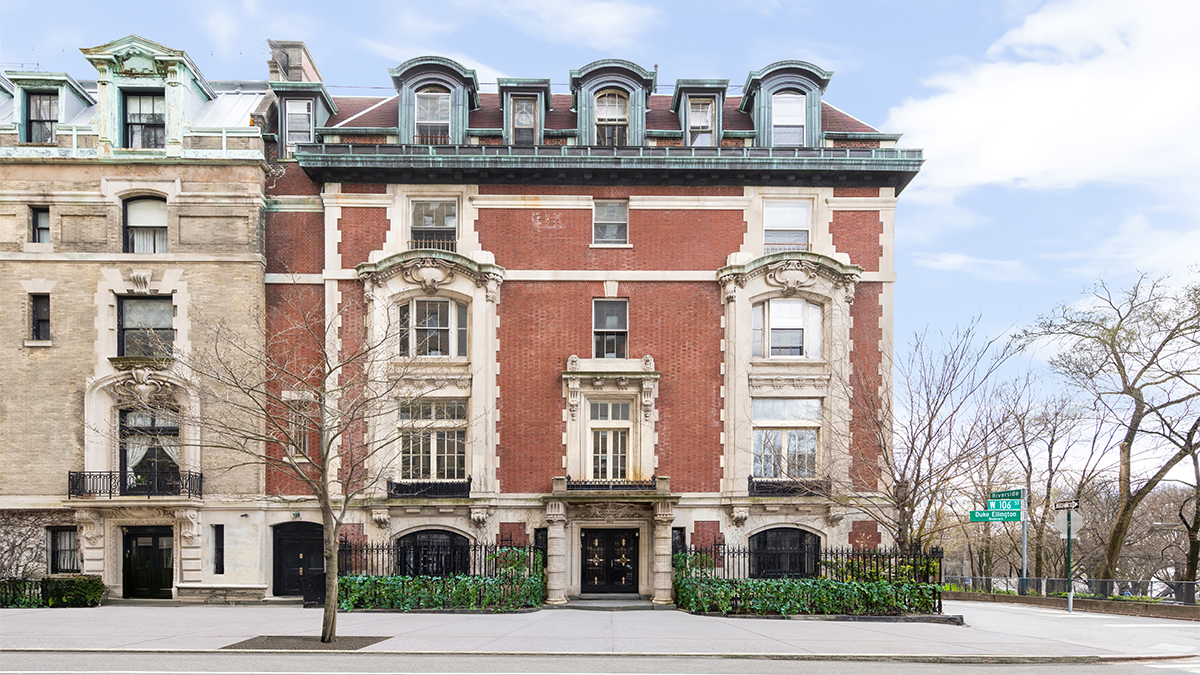
A New Form of Luxury in the World’s Most Vertical City
In a city defined by limited space, the idea of a mansion might seem incompatible with Manhattan’s urban landscape. Yet over the past decade, a new category of ultra-prime real estate has quietly emerged: the Manhattan mega-mansion.
Rather than building new estates, ultra-high-net-worth buyers are acquiring multiple adjacent townhouses and combining them into single, expansive residences. In doing so, they are effectively recreating suburban-scale private homes within one of the world’s most expensive and space-constrained cities. 
According to recent research, at least 19 mega-mansion combinations have been identified in Manhattan since 2010, transforming what were once separate historic buildings into enormous private compounds. For the global elite, these properties represent something increasingly rare in Manhattan: space, privacy and architectural permanence.
The Billionaire Strategy: Buy the Block, Not only the House
The mechanics behind these mega-mansions are deceptively simple. Buyers acquire two, sometimes three, neighbouring townhouses and merge them internally, creating residences that span entire building widths and multiple floors.
In a city where traditional townhouses typically measure 18 to 25 feet wide, combining properties dramatically increases both scale and architectural possibilities. Suddenly, grand staircases, double-height reception rooms, indoor pools and private wellness floors become feasible.
Developers and architects have begun referring to some of these projects as “double-wide” townhouses, a rare format in Manhattan that offers the spatial proportions usually associated with European hôtels particuliers or London’s grand Belgravia residences.
One recent West Village project created a six-story, 13,000-square-foot mansion by merging two historic townhouses, illustrating how dramatically these conversions can expand residential scale. 
A Revival of Gilded Age Living
The emergence of Manhattan’s mega-mansions also represents a return to the city’s architectural past. At the turn of the twentieth century, New York’s wealthiest families constructed vast urban palaces along Fifth Avenue and the Upper East Side. These residences were designed as private estates within the city, often spanning multiple lots and featuring ballrooms, galleries and grand staircases. Many of those homes were later subdivided into apartments or institutional buildings during the twentieth century.
Today, a reverse transformation is underway. Wealthy buyers are reassembling fragmented townhouses back into single-family residences, restoring a scale of urban living reminiscent of the Gilded Age. One of the most striking examples sits at 7–9 East 72nd Street on the Upper East Side, where two historic Beaux-Arts mansions were combined into a single 45,000-square-foot residence, making it one of the largest private homes in New York City. 
The Geography of Manhattan’s Mega-Mansions
The phenomenon is concentrated in a handful of neighbourhoods where historic townhouses dominate the streetscape.
- Upper East Side: Long considered Manhattan’s most traditional townhouse district, the Upper East Side has become a focal point for ultra-large private residences.
- West Village: With its narrow streets and landmarked brownstones, the West Village has emerged as another centre for mega-mansion conversions.
- Tribeca: Former industrial buildings and loft conversions in Tribeca provide opportunities for compound-style residences spanning multiple structures.
These neighbourhoods share a crucial trait: architectural continuity and limited supply, making large single-family homes exceptionally rare.
Why High-Net-Worth Buyers Are Seeking Manhattan Mega-Mansions
The demand for mega-mansions reflects broader shifts in global wealth and lifestyle expectations. For many high-net-worth individuals, luxury living now requires a level of privacy and amenities that traditional Manhattan apartments struggle to provide. Mega-mansions offer the ability to integrate features typically found in suburban estates or private compounds.
These may include:
- Full wellness floors with spas and swimming pools
- Private garages and staff quarters
- Screening rooms and art galleries
- Multi-level entertaining spaces
- Private gardens and rooftop terraces
Perhaps most importantly, mega-mansions provide something increasingly scarce in Manhattan real estate: complete ownership of an entire building. For global buyers accustomed to expansive residences in cities like London, Dubai or Los Angeles, this level of control over space has become a defining luxury.
The Future of Manhattan’s Largest Homes
While the total number of mega-mansions remains relatively small, the trend highlights a broader transformation at the very top of Manhattan’s property market. In a city where land is effectively finite, the ultra-wealthy are not necessarily building new homes, they are reconfiguring the existing city to create them. The result is a new class of property: urban estates hidden within historic streets, where multiple buildings function as a single residence.
For Manhattan’s global elite, the mega-mansion represents the ultimate contradiction, a private compound in the middle of the world’s most dynamic city. And in a market where scarcity defines value, these properties may become the rarest residential assets New York has to offer.
Continue into the portal - curated inventory, search and discovery.