
Marbella Sets a New Benchmark as Zero-Carbon Luxury Redefines the Top End
A zero-carbon villa in Cascada de Camoján signals a shift in Marbella’s prime market, where energy performance and long-term efficiency are beginning to define value alongside location and design.
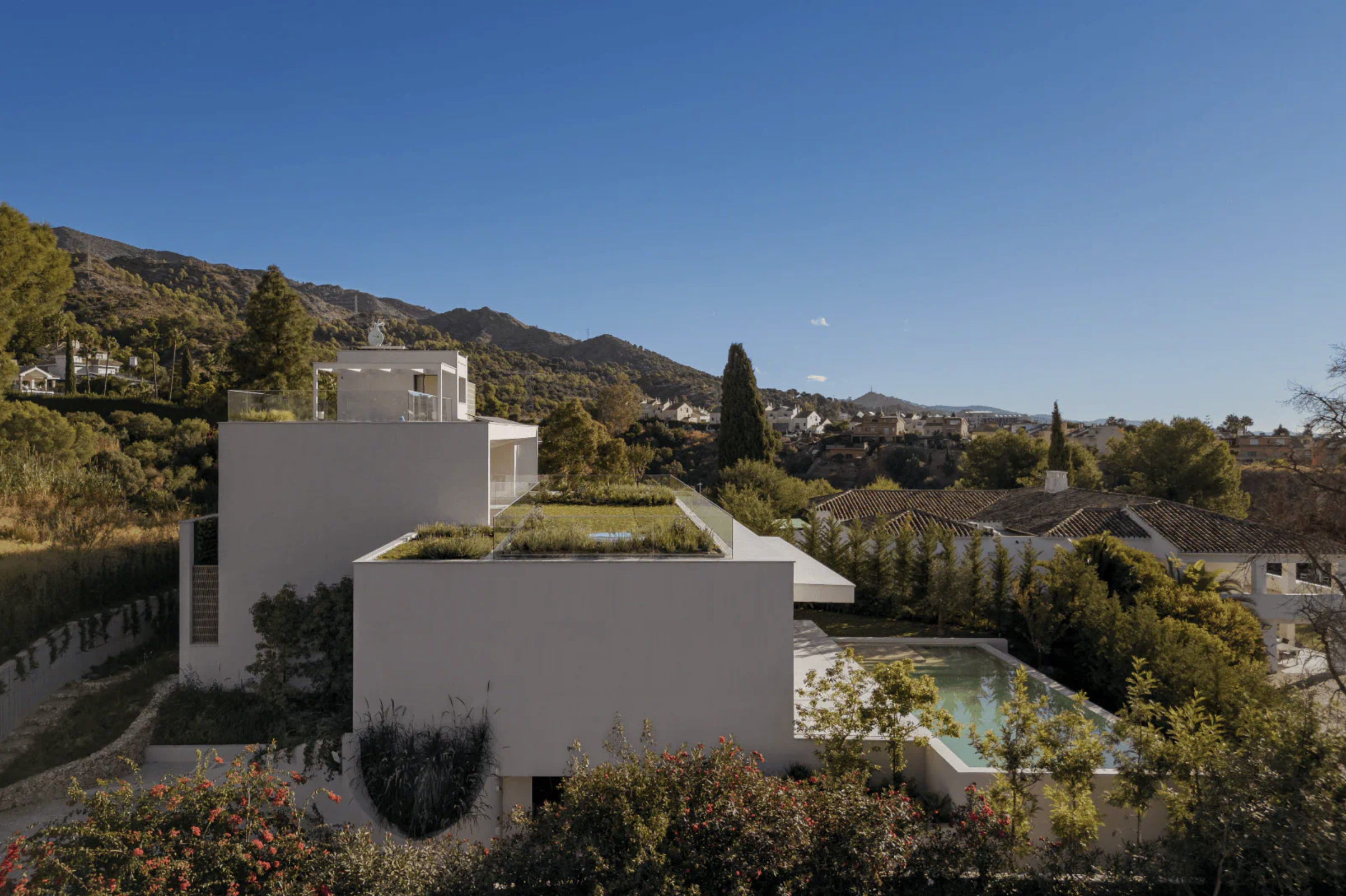
In one of Marbella’s most established residential enclaves, Cascada de Camoján, a recently completed villa has introduced a different kind of benchmark. It is not defined by scale or visual impact alone. Its significance lies in something more fundamental, full energy independence and verified zero-carbon operation. The property is designed to sustain itself, producing its own energy, managing its own resources and operating with a level of efficiency rarely seen at this end of the market.
The villa has already sold. This is not a concept or a developer narrative, but a completed home absorbed directly into the luxury market. In a region long defined by location, views and design, this shifts the definition of what constitutes the most prime real estate.
Beyond Design: What Defines a Zero-Carbon Villa
What distinguishes this type of property is not immediately obvious. There is no single feature or design gesture that defines it at first glance. The difference lies in how the home has been conceived and built from the outset. At its core, it is simple: a home designed to produce as much energy as it consumes, with minimal environmental impact. Delivering this requires precision.
Energy is generated on-site rather than supplied externally. Consumption is carefully managed. Systems are integrated into the structure of the home, not added as secondary elements. Orientation, insulation and material choices are treated as essential parts of the design, directly influencing how the property performs on a daily basis. The real shift lies in how efficiently and intelligently the home operates over time.
The End of Passive Luxury
For decades, luxury real estate along the Costa del Sol has been defined by abundance. Larger plots, luxury finishes, open terraces and uninterrupted views have shaped the identity of the market. Performance, by comparison, remained largely passive. That distinction is starting to fade.
At the top end, buyers are no longer drawn solely to what a property offers visually or spatially. There is a growing awareness of how a home operates on a daily basis. Energy consumption, environmental impact and long-term efficiency are becoming part of the decision-making process, not as secondary considerations, but as factors that sit alongside design and location.
A Market That Has Started to Absorb the Shift
The fact that this villa has already been sold is what gives the story weight. It confirms that this is not a theoretical direction or an isolated experiment, but something the market is willing to recognise and value.
Marbella’s prime segment has historically been quick to adopt design trends, architectural styles and lifestyle concepts. What is different here is that the change is less visible and more structural. It is not about aesthetics or branding, but about performance and longevity. Once this layer is introduced at the top end, it tends to remain.
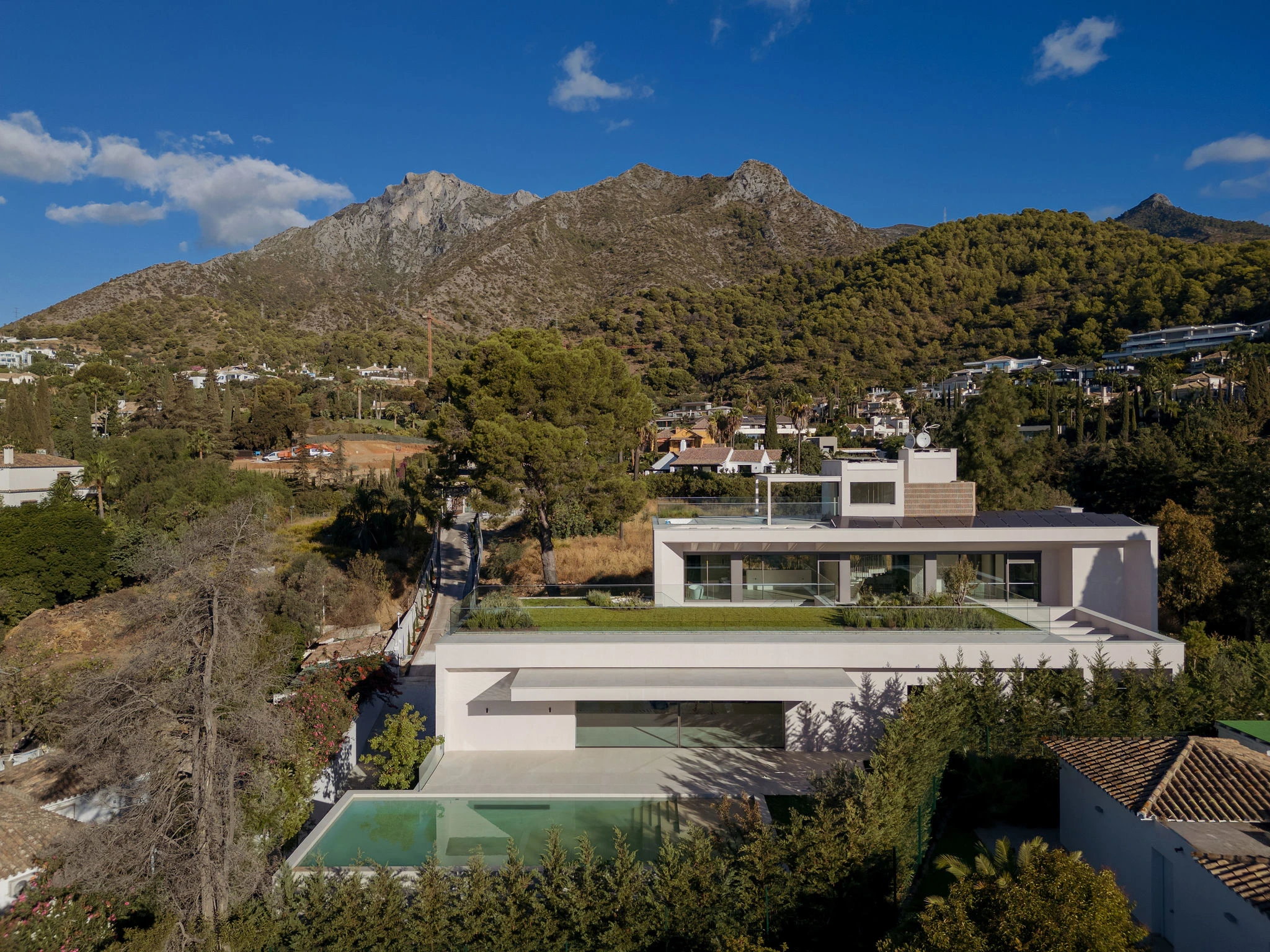
Performance as a Measure of Value
What is emerging is a broader definition of what makes a property truly prime.
Location remains fundamental. Views, privacy and architectural quality continue to carry weight. But alongside these, a new metric is forming. One that considers how a property sustains itself, how efficiently it operates and how resilient it is over time. This is not about sustainability as a concept. It is about performance as a measurable quality.
Homes that can operate independently, reduce long-term costs and align with future regulatory and environmental expectations introduce a different kind of security. One that is less visible, but increasingly relevant at the highest level of the market.
Marbella’s Next Phase
Marbella has reached a level of maturity where incremental improvements no longer redefine its prime areas. The next phase is shaped by fundamental shifts in how properties are built and evaluated. And that includes Zero-carbon development.
It does not replace design, nor does it compete with location. It adds another layer to both. A property can still be defined by its setting and its architecture, but increasingly it will also be defined by how intelligently it has been constructed to operate over time. This is how markets evolve. Not through sudden change, but through a gradual redefinition of what is expected.
The sale of a zero-carbon villa in Cascada de Camoján marks more than an isolated milestone. It reflects a change in how value is being understood at the top end of Marbella’s property market. Luxury, in this context, is no longer only about what is seen and experienced in the moment. It is also about how a property performs, quietly and consistently, over years of ownership.
Continue into the portal - curated inventory, search and discovery.